.svg)
May 24, 2026


May 24, 2026
The editorial argues that the political case for accelerating the green transition has become stronger, not weaker, even as energy debates in the UK have grown more polarized ahead of local and devolved elections. It says energy has not been central to the campaign in England because major decisions are made in Westminster, but stresses that the positions taken in Scotland and Wales will still shape the wider national climate debate. The piece highlights a sharp divergence between parties: Conservatives and Reform UK are presented as increasingly hostile to net zero and renewables, while Scottish Labour backs new nuclear power and only the Greens are firmly opposed to further North Sea fossil-fuel development. More broadly, the editorial notes that governments around the world have responded differently to the latest energy-price shock, with some relying on fuel tax cuts, coal, or conservation measures, while others, including leaders in Europe and India, have used the crisis to argue for a faster shift toward renewables.
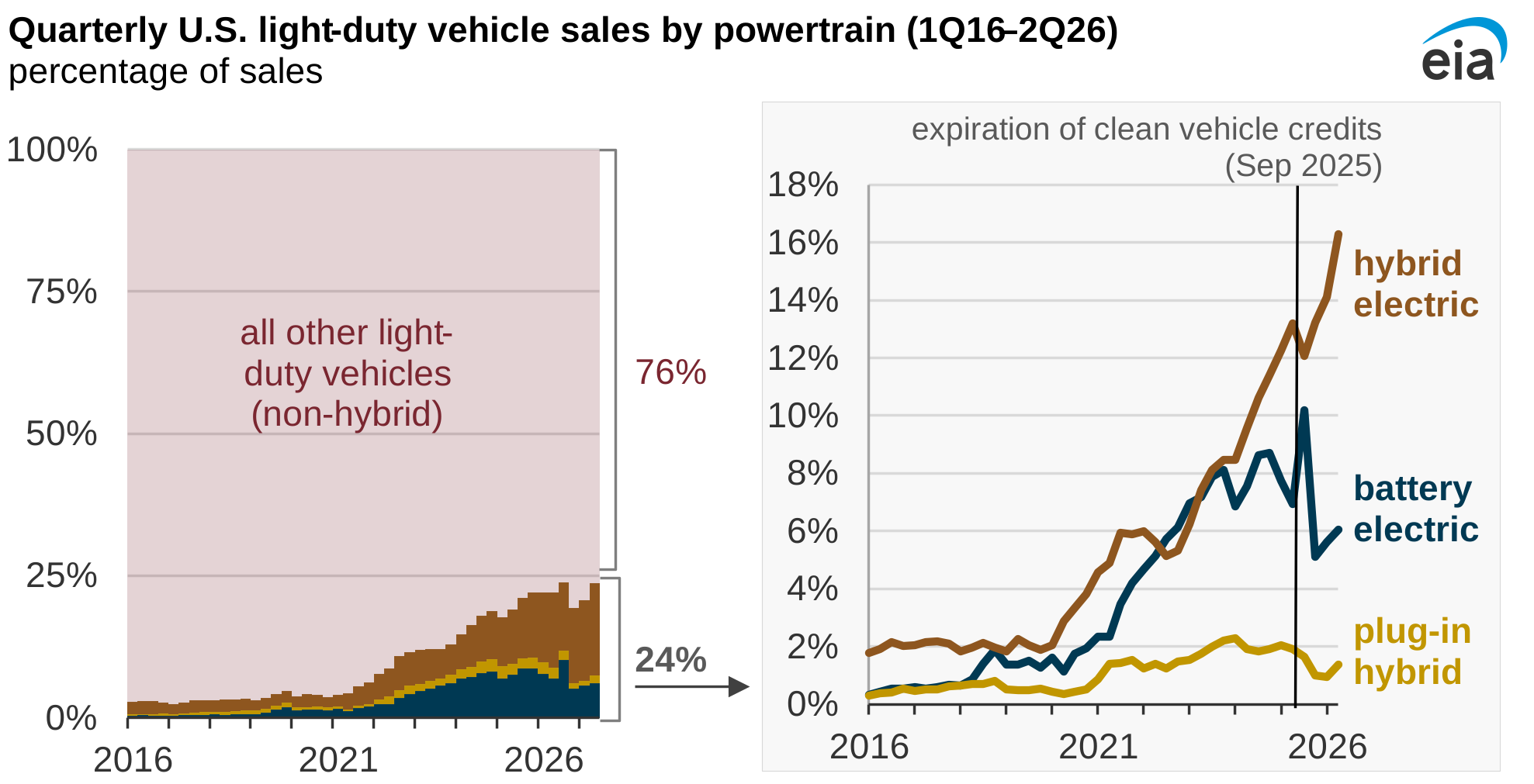
The Guardian’s central conclusion is that the volatility and insecurity associated with fossil fuels should be treated as another reason to move faster toward clean energy, not as an excuse to delay. It argues that the climate case remains paramount, but also suggests that recent geopolitical disruption and price spikes can create a useful short-term incentive for governments to invest in wind and solar. At the same time, the editorial says the transition cannot be left to governments alone: households and businesses also matter, and rising sales of electric vehicles and solar panels in the UK and continental Europe are presented as evidence that people will change their behavior when conditions push them to do so. The final message is that after the elections, administrations across the UK should help build broad public support for renewables, because the shift away from fossil fuels is both urgent and dependent on political as well as social buy-in.
















.webp)

.webp)